Toughened Glass Manufacturers in Tamil Nadu Commercial & Residential
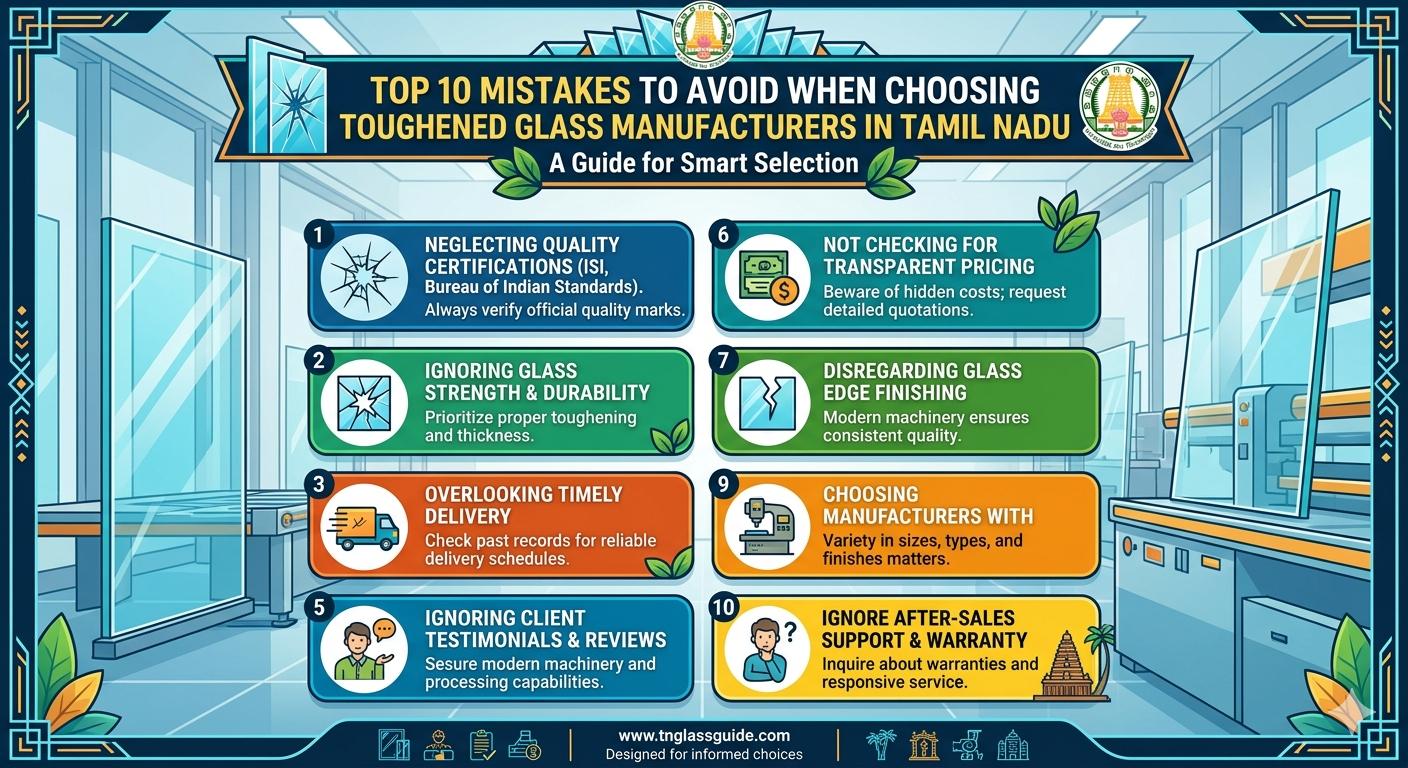
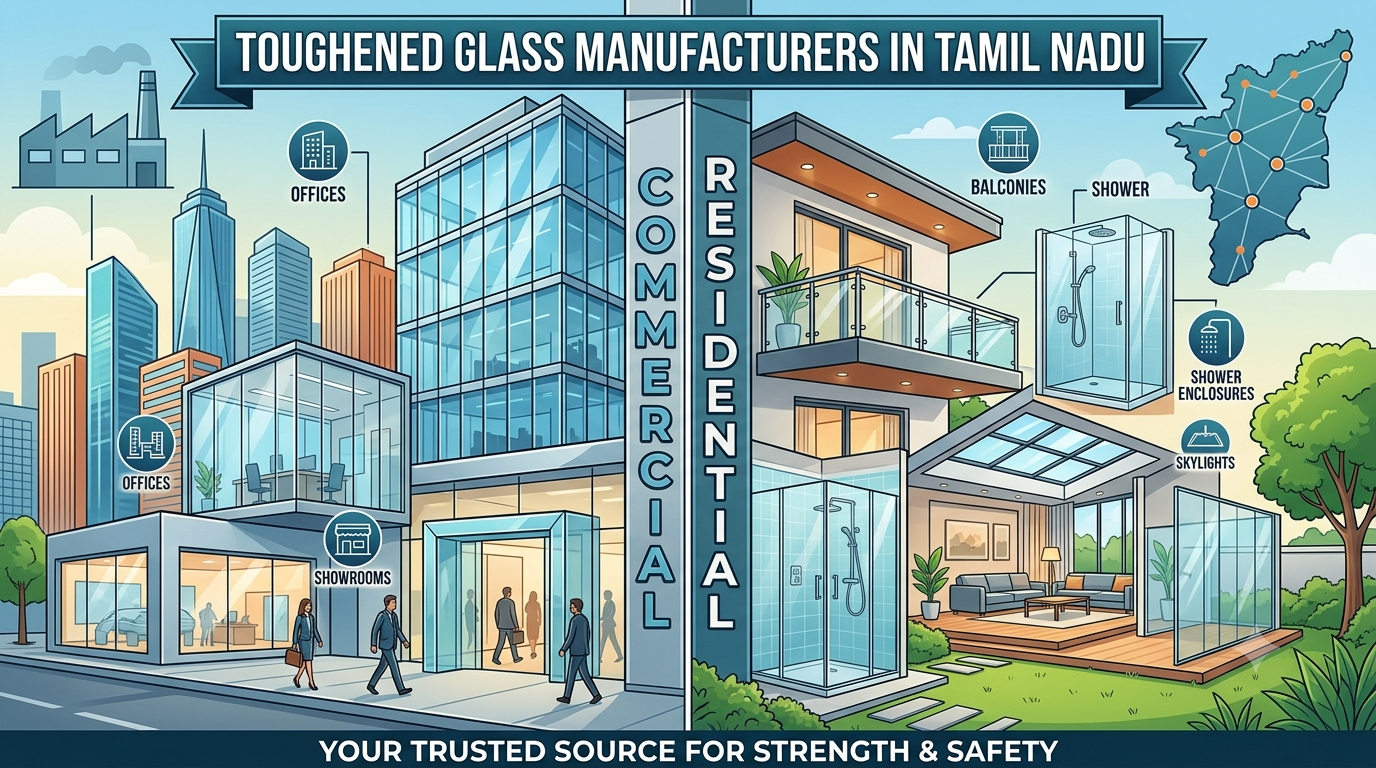
Glass has quietly become one of the most important materials of modern building. Take a stroll through any new office complex, apartment building or retail showroom in Tamil Nadu today and you’ll see glass doing much more than letting in light – it’s creating staircases, balconies, partitions, facades and even flooring. None of this could happen without one key process: toughening. If you are planning for a construction or renovation project and are looking for reliable toughened glass manufacturers in Tamil Nadu, this guide takes you through what toughened glass is, why the state has emerged as a strong manufacturing base and how to choose a supplier that won’t let you down in the middle of the project. What is Different About Toughened Glass? Normal annealed glass , like the glass in older windows , breaks into big jagged shards . That’s dangerous in areas with heavy traffic / high impact areas. Toughened glass is sometimes called tempered glass . It is heated and then rapidly cooled in a controlled manner to change its internal structure . The surface is kept in compression and the core in tension, which offers two major advantages to the glass: Strength: It can take about four to five times the impact and thermal stress of regular glass of the same thickness. Safety: If it does break, it breaks into small, dull pieces rather than sharp shards, greatly decreasing the likelihood of injury. It’s for this reason building codes and safety regulations are increasingly requiring toughened glass in places like balconies, storefronts, shower enclosures, staircases and glass railings. Why Tamil Nadu Has Become A Stronghold For Toughened Glass Products Tamil Nadu becoming a glass processing hub does not come as a surprise. This has been due to a few things: 1. Industrial Infrastructure Cities like Chennai, Coimbatore, Madurai and Tiruchirappalli have well-developed industrial corridors with reliable power supply, logistics networks and skilled labor – all essential for running energy-intensive glass toughening furnaces. 2. Nearness to Construction Boom Commercial real estate, IT parks, retail spaces and residential high-rises have been growing steadily in Tamil Nadu. Glass is a fragile material and expensive to ship over long distances so local manufacturing shortens lead times and transportation costs. 3.Export Connectivity The manufacturers are well placed to serve the domestic market as well as export toughened glass products to other states and countries being in Tamil Nadu where the major ports of Chennai and Tuticorin are located. 4. Skilled Workforce Development Glass processing needs to be precise, since incorrect heating cycles can lead to warping, optical distortion, or inconsistent strength. The technical training ecosystem of Tamil Nadu has built a workforce capable of operating modern toughening lines to consistent quality standards. Uses of Toughened Glass in Industry Companies choose toughened glass for a variety of esthetic, durable and compliance reasons: Storefronts and Showroom Facades — Big glass panels provide an open, inviting look while standing up to daily wear and tear and accidental impact. Office Partitions – Toughened glass partitions provide a modern open plan look without compromising structural safety. Elevator Enclosures & Glass Doors – Glass in high traffic areas must be able to withstand repeated stress and not weaken over time. Table Tops & Display Counters Toughened glass is a popular choice with retail and hospitality businesses as it is scratch resistant and has a clean finish. Use of Tempered Glass in Residential Applications Homeowners are specifying toughened glass for both safety and design reasons, more and more: Balcony and Staircase Railings – Popular for modern homes that want clear views but still want to be safe. Shower Enclosures and Bathroom Partitions – Resistant to humidity, thermal shock and daily impact. Kitchen Backsplashes – Easy to clean, heat resistant and available in many finishes. Skylights and Roof Panels — Toughened glass is far more efficient than standard glass in terms of temperature changes and the elements. How to Select the Best Toughened Glass Supplier in Tamil Nadu Given the number of manufacturers spread throughout the state, here are some points to consider before selecting a supplier: Testing & Certification Standards To verify the manufacturer adheres to quality standards (such as IS 2553 or EN 12150) and is able to issue test certificates for batches of glass. Thickness & Customization A good manufacturer will be able to offer a range of thicknesses from 6mm to 19mm, and will be able to customize sizes, edge finishes and drilling for fittings such as hinges or handles. 3. Turn around time Construction schedules tend to be tight. Ask about production lead time, especially for large or custom orders. 4. Installation Help Some manufacturers only sell glass, others do full installation. If you don’t have an experienced glazing contractor already, working with a manufacturer that installs can reduce coordination headaches. 5. After-Sales Service Sometimes, even toughened glass may need to be replaced due to spontaneous breakage (a rare but known phenomenon with tempered glass).Select a manufacturer that backs their product with a strong warranty or replacement policy. 6. Review & Past Projects Ask to see any work done in commercial or residential projects. A manufacturer with a decent portfolio and good client feedback is generally a safer bet than one with no verifiable track record. Closing Remarks Whether you’re constructing a home where both safety and style are priorities, or outfitting a commercial space that needs to look sleek and stand up to daily foot traffic, toughened glass is one of the smartest material choices available today. Tamil Nadu’s mix of industrial capacity, skilled workforce and good logistics make it a reliable place to source this material – but it’s still up to the buyer to check out manufacturers carefully. “Take the time to check certifications, ask about customization and clarify warranty terms before placing a bulk order.” A little bit of diligence up front can save a lot of cost and hassle down the road.
Read More Read More