

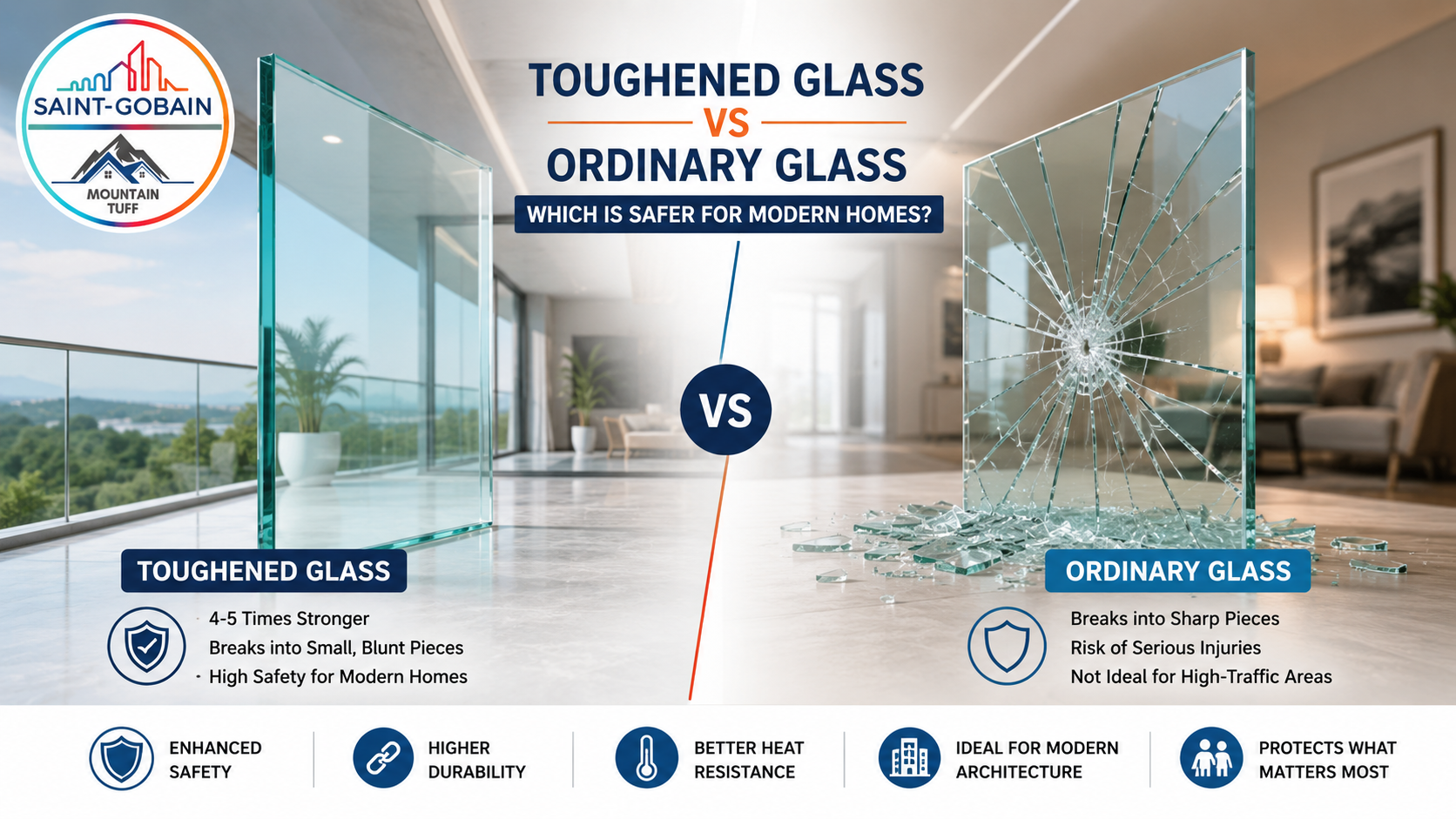
Toughened Glass vs Ordinary Glass: Which Is Safer for Modern Homes?
When choosing glass for a home, many people focus on appearance, price, or design. Safety often becomes a concern only after an accident happens. Whether you are building a new home, renovating a balcony, installing shower enclosures, or upgrading windows, the type of glass you choose can make a significant difference.
One of the most common questions homeowners ask is whether toughened glass is really safer than ordinary glass. The answer is yes, but understanding why requires looking at how each type of glass is made and how it behaves when exposed to impact, heat, and everyday use.
For homeowners seeking durable and secure glazing solutions, a trusted Toughened Glass Manufacturer in Chennai can help identify the right option for modern residential spaces.
What Is Ordinary Glass?
Ordinary glass, also known as annealed glass, is the standard glass used in many traditional applications. It is produced by cooling molten glass gradually until it hardens.
While ordinary glass is clear and relatively affordable, it has one major drawback: it breaks into large, sharp shards. These pieces can cause serious injuries if someone falls against the glass or if the glass breaks due to impact.
Common uses of ordinary glass include:
- Picture frames
- Small interior windows
- Decorative panels
- Low-risk indoor applications
What Is Toughened Glass?
Toughened glass, also called tempered glass, undergoes a special heating and rapid cooling process. This treatment makes the glass several times stronger than ordinary glass of the same thickness.
The biggest advantage of toughened glass is the way it breaks. Instead of forming dangerous sharp shards, it shatters into small, blunt granules that are far less likely to cause severe injury.
Toughened glass is commonly used for:
- Balcony railings
- Shower partitions
- Glass doors
- Staircase railings
- Office partitions
- Modern windows
- Building facades
How Much Stronger Is Toughened Glass?
In practical terms, toughened glass is typically four to five times stronger than ordinary glass.
This increased strength allows it to withstand:
- Accidental impacts
- Slamming doors
- Wind pressure
- Thermal stress
- Daily wear and tear
For homes with children, elderly family members, or pets, this added durability can significantly reduce the risk of glass-related injuries.
Safety Comparison between Ordinary Glass and Toughened Glass
| Feature | Ordinary Glass | Toughened Glass |
| Strength | Standard | 4–5 times stronger |
| Impact resistance | Low | High |
| Breakage pattern | Sharp shards | Small blunt pieces |
| Heat resistance | Moderate | Excellent |
| Suitable for high-traffic areas | Not recommended | Highly recommended |
| Initial cost | Lower | Higher |
Why Modern Homes Prefer Toughened Glass
Modern architecture uses more glass than ever before. Large windows, open balconies, glass staircases, and frameless shower enclosures create bright and spacious interiors.
However, these designs also place glass in areas where people frequently move, lean, or make contact with it. Using ordinary glass in such locations can be risky.
Homeowners increasingly choose toughened glass because it offers:
- Better protection during accidents
- Greater resistance to everyday impacts
- Improved durability in changing weather
- Compliance with modern building safety standards
- Long-term peace of mind
Which Areas of a Home Should Use Toughened Glass?
Some locations should almost always use toughened glass due to safety considerations.
Recommended areas
Safety-critical
Balcony railings
Shower enclosures
Glass doors
Staircase panels
French windows
Skylights
Large fixed glass panels
Ordinary glass may still be acceptable for small decorative applications where human impact is unlikely.
What About Cost?
Many homeowners initially choose ordinary glass because it is cheaper. While the upfront cost is lower, the overall value may not be.
Toughened glass often lasts longer and is less likely to break during regular use. More importantly, avoiding a single injury or replacement can offset the higher initial investment.
When considering the total cost of ownership, including safety, maintenance, and durability, toughened glass is usually the more economical choice for active residential areas.
Heat and Weather Performance
In cities with hot climates, glass is exposed to significant temperature changes throughout the day.
Ordinary glass can develop stress when one portion becomes much hotter than another. Toughened glass is designed to handle these temperature differences more effectively, making it suitable for:
- Sun-facing windows
- Balcony enclosures
- Building facades
- Terrace structures
This is particularly important for homes that receive strong afternoon sunlight.
A Real-World Example
Imagine a child accidentally throws a ball at a glass door.
If the door is ordinary glass
- The glass may crack suddenly.
- Large sharp pieces can fall.
- Anyone nearby could be injured.
If the door is toughened glass
- The glass is more likely to withstand the impact.
- If it does break, it shatters into small rounded pieces.
- The risk of deep cuts is greatly reduced.
This difference in breakage behavior is the primary reason safety regulations often require toughened glass in critical locations.
How to Identify Toughened Glass
Genuine toughened glass usually has a small permanent marking or stamp from the manufacturer. This mark indicates that the glass has undergone the tempering process and meets the required standards.
When purchasing glass for a home project, always verify that the product is supplied by a reliable manufacturer and ask for the appropriate specifications.
Which One Should You Choose?
Choose based on where the glass will be used
Quick decision guide
Choose ordinary glass if:
- The glass is purely decorative.
- It is installed in a low-risk indoor area.
- Human contact is minimal.
Choose toughened glass if:
- Safety is a priority.
- The glass is part of a door, window, railing, or partition.
- Children or elderly family members are present.
- The area experiences frequent use.
- You want better durability and long-term reliability.
Conclusion
For modern homes, toughened glass is clearly the safer option. Its superior strength, impact resistance, and safer breakage pattern make it ideal for the areas where accidents are most likely to occur.
Ordinary glass still has a place in certain decorative applications, but when it comes to doors, windows, railings, shower enclosures, and other frequently used spaces, toughened glass provides a much higher level of protection.
Investing in quality safety glass is not just about following a trend. It is about creating a home that looks modern while protecting the people who live in it every day.
FAQs
1. Is toughened glass completely unbreakable?
No. Toughened glass is much stronger than ordinary glass, but it can still break under extreme impact or improper installation.
2. Can ordinary glass be converted into toughened glass later?
No. The glass must undergo the tempering process during manufacturing. Existing ordinary glass cannot be strengthened afterward.
3. Which glass is better for balcony railings?
Toughened glass is strongly recommended for balcony railings because it offers greater strength and safer breakage behavior.
4. Does toughened glass reduce heat entering the home?
By itself, toughened glass does not significantly reduce heat. However, it can be combined with reflective or double-glazed solutions for better thermal performance.
5. How do I know if my glass is toughened?
Look for a permanent manufacturer’s stamp or marking on the corner of the glass, which indicates that it has been tempered according to safety standards.



Add a comment